Cost and Quality of Stainless Steel Buffer Tanks

All Categories

stainless steel buffer tank

Stainless  steel buffer tanks  play a critical role in renewable energy systems, offering efficient thermal storage  for heating applications. As a B2B buyer, understanding  the factors that impact the cost,  installation, and quality  of these tanks is essential  for  making informed  purchasing  decisions. This  article will delve into  the cost  factors associated with stainless steel buffer tanks,  common installation challenges and their solutions, quality evaluation  criteria,  applications in  renewable energy systems,  and how to compare different tanks  for bulk orders.


Common Installation Problems with Stainless Steel Buffer Tanks and Solutions

Installing stainless steel buffer tanks can present several challenges  that may affect their performance and lifespan.  One common issue arises from improper sealing during installation, which can lead to leaks. To mitigate this, it is crucial to ensure that  all joints  and  connections are appropriately sealed and that the installation is conducted by  experienced professionals.

Another challenge can be the incorrect placement of the  tank in  relation to other heating elements. If the tank is not positioned optimally, it can lead to inefficient heating  or cooling cycles. Buyers should work closely with engineers  to determine the best installation layout, considering factors  such as  accessibility for maintenance and alignment  with existing systems.

In some cases, inadequate insulation can result in heat loss, reducing the  tank's efficiency. Buyers  should ensure  that the tank is equipped with suitable  insulation materials and thickness, tailored to their specific operational  environment. By addressing these common installation problems proactively, buyers can enhance the operational efficiency and longevity of their stainless steel  buffer tanks.
 

Evaluating the Quality of Stainless Steel Buffer Tanks for Projects

When evaluating the quality of stainless steel  buffer tanks, several key specifications should be considered. First, the thickness  of the stainless steel directly impacts the tank's  durability and resistance to pressure. Thicker walls generally offer better performance  but may also increase  the overall weight and cost.

Another  important  factor is the quality of the welding. Poor welding can  lead to weak  points  that may fail under pressure or  temperature fluctuations. Buyers should request information on  the welding standards used during production and consider inspections or certifications that validate the welding quality.


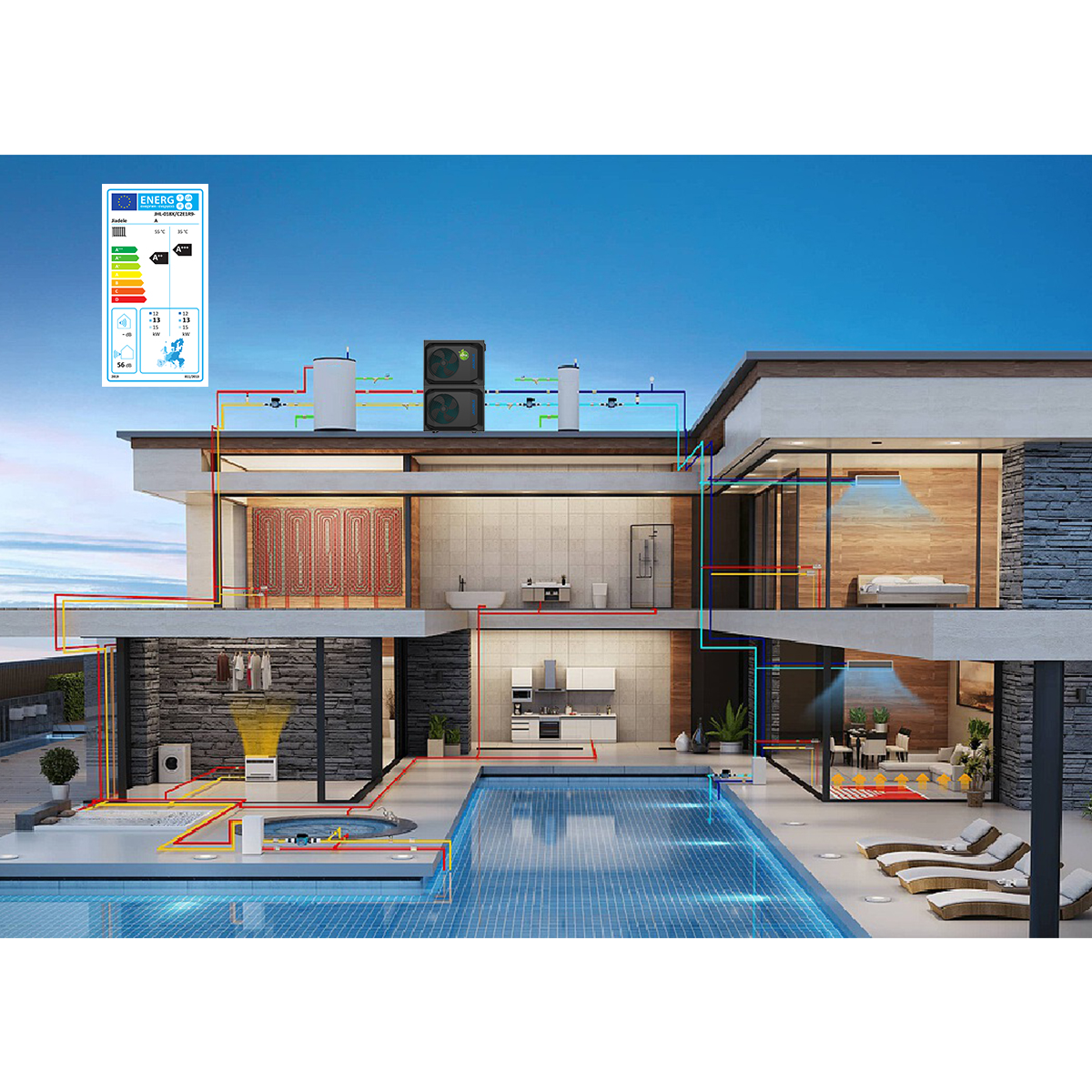
Additionally, buyers should examine the tank's insulation properties, as effective insulation is crucial for maintaining temperature and reducing energy loss. Insulation  materials and techniques can vary, so it’s  essential  to confirm that the chosen tank meets the specific thermal  performance requirements of the intended  application. For instance, the R32 heating cooling DHW solar heat pump air source provides excellent thermal efficiency.

Lastly, buyers should ensure that the tanks are  compliant with relevant industry certifications, such as CE or RoHS. These certifications not only demonstrate adherence to safety and environmental  standards but also reflect a commitment to quality manufacturing practices.

Applications of Stainless Steel Buffer Tanks in Renewable Energy Systems

Stainless steel buffer tanks are  integral to various  renewable energy systems, particularly in solar  heating and heat  pump applications. In solar thermal systems, these tanks store excess thermal  energy generated during sunny periods, making it available for use during cloudy days or at  night. This capability helps optimize energy use and enhances the overall efficiency of the solar system.

In heat  pump applications, buffer tanks can help stabilize fluctuations in heating demand. By storing  hot water,  they allow heat pumps  to operate more efficiently,  reducing wear  and  tear and  extending the system's lifespan. This is  particularly beneficial in commercial settings where demand can vary significantly throughout the day.

Furthermore, stainless steel buffer tanks are often used in combination with other renewable technologies, such as biomass heating systems. Their durability and resistance to  corrosion make them  suitable for handling various fluids, including those  with higher acidity or particulate  content. This versatility positions them as a valuable  component in any renewable energy system.

Comparing Different Stainless Steel Buffer Tanks for Bulk Orders

When considering bulk orders of stainless steel buffer tanks, it is essential to compare various factors beyond  price. Start by evaluating the specifications of each tank,  such as material grade, capacity, and insulation type. Ensure that the tanks meet the specific requirements of your application and comply with relevant standards.

Next, consider the manufacturer's production capabilities and lead times. A reliable supplier should be able to  provide clear timelines for production and delivery, especially for bulk orders. It's also beneficial to inquire  about their customization capabilities, as this can be crucial for meeting unique project specifications.


Quality assurance processes are another critical aspect to assess. Look for suppliers that  have established quality control  measures, including testing protocols and certifications. This ensures that you receive consistent, high-quality products that meet your performance  expectations.

Lastly, consider the supplier's customer service and support. A vendor  that offers responsive communication and technical assistance can significantly enhance  your  purchasing experience and help resolve any issues that  may arise  during the project.

By taking these considerations  into account,  buyers can make informed  decisions when  selecting stainless steel buffer tanks for their projects, ensuring both  quality and value in  their  procurement processes.

Understanding the Cost Factors of Stainless Steel Buffer Tanks

The cost of stainless steel buffer tanks can vary significantly based on several factors, including material quality, tank size, and additional features. Stainless steel offers  excellent corrosion resistance and  durability, which is  crucial for long-term performance in heating applications. Higher-grade stainless steel may come at a  premium but  can provide better longevity and efficiency. Additionally, buyers looking for efficient solutions may want to consider options like the R290 Pool Heat Pump Warmhouse Hot and Cold Water Inverter, which offers advanced features.

Another significant factor is  the tank's size and capacity. Larger tanks will typically incur higher  manufacturing and shipping costs. Customization options, such as specific fittings, insulation, or  additional connections, can also add to the  overall price. Additionally, certification costs, such as CE and ISO, should be  considered, as they  ensure compliance  with  international standards.

Lastly,  the manufacturing process can influence costs.  Tanks produced with advanced  techniques may offer enhanced  performance, but  this can result in higher upfront costs. Buyers should weigh these factors against  their specific application needs and budget constraints to determine the most  suitable option.

Why choose JIADELE stainless steel buffer tank

Zhejiang JIADELE Professional team

company's team Monoblock heatpumpwith more than 10 experienced engineering and R D engineers Each engineer has more than 20 years experience water heater development research and can customize various professional products meet different needs meet customer needs. the same time have wide range professional after-sales service teams overseas offer customers professional after-sales service help customers product issues after sales quickly manner. have a branch Poland, can provide technical specifications product, test report, other documentation support marketing activities.

We provide ou customer high quality product

majority of the equipment used in Air to water heaterby business imported as well as the company's own equipment. also has staff who have over 15 years of manufacturing expertise. This ensures the quality and reliability all our products, from mechanical equipment to the operator. date, it has a group of reliable stable customers both in United States and overseas.

One-stop full customization service

We are an organization for air to water heat pump with a strong professional background. To meet the requirements of various customers, we provide a type of business models, including wholesale, retail and custom processing. We can offer users suitable solutions and high-quality things that meet up with the diverse demands associated with the different customers. We provide a wide assortment of product provider solutions, through the assortment of products to equipment design manufacturing, installation and until landing.

Rich industry experience and price advantage

Our JIADELE happens to be centering on the hot-water industry for more than 23 years. We provide possibilities for customers who require commercial and household hot water, cooling in addition to heating systems. The business has solid expertise in production, procurement and product sales, and has amassed the trust of its customers with more than 20 ages of industry expertise. We might offer our clients the top-quality services and products in the affordable price most to your huge-scale procurement along with standard production.

Our Blog Posts

What are the advantages of air source heat pumps?

29

Nov

What are the advantages of air source heat pumps?


1. High efficiency and energy saving
As mentioned above, air source heat pumps are based on the reverse Carnot cycle principle, with high energy efficiency ratio. They can move a large amount of heat in the air with less electricity consum...
View More
Why a Heat Pump Water Heater Should Be Your Next Home Upgrade

12

Mar

Why a Heat Pump Water Heater Should Be Your Next Home Upgrade

Water heating accounts for around 18% of the average home’s energy use. Switching to an energy-efficient heat pump water heater can make a difference on your utility bill and is an essential step in lowering the carbon footprint of your home. View More
How a Top Heat Pump Manufacturer Supports B2B Clients

29

Sep

How a Top Heat Pump Manufacturer Supports B2B Clients

Understanding how a top heat pump manufacturer supports B2B clients is essential for businesses looking to invest in renewable energy heating solutions. With growing concerns about energy efficiency and sustainability, selecting the right heat pump c...
View More
How Inverter Heat Pump Water Heater Works in Low Temp

29

Sep

How Inverter Heat Pump Water Heater Works in Low Temp

Inverter heat pump water heaters are innovative systems designed to provide efficient water heating, even in low-temperature environments. These units leverage advanced inverter technology to adjust their operation according to ambient temperatures, ...
View More

Get In Touch

Have questions about JIADELE?

Our professional sales team are waiting for your consultation.

GET A QUOTE